Neo-Traditional Tattoo Style: A Complete Guide

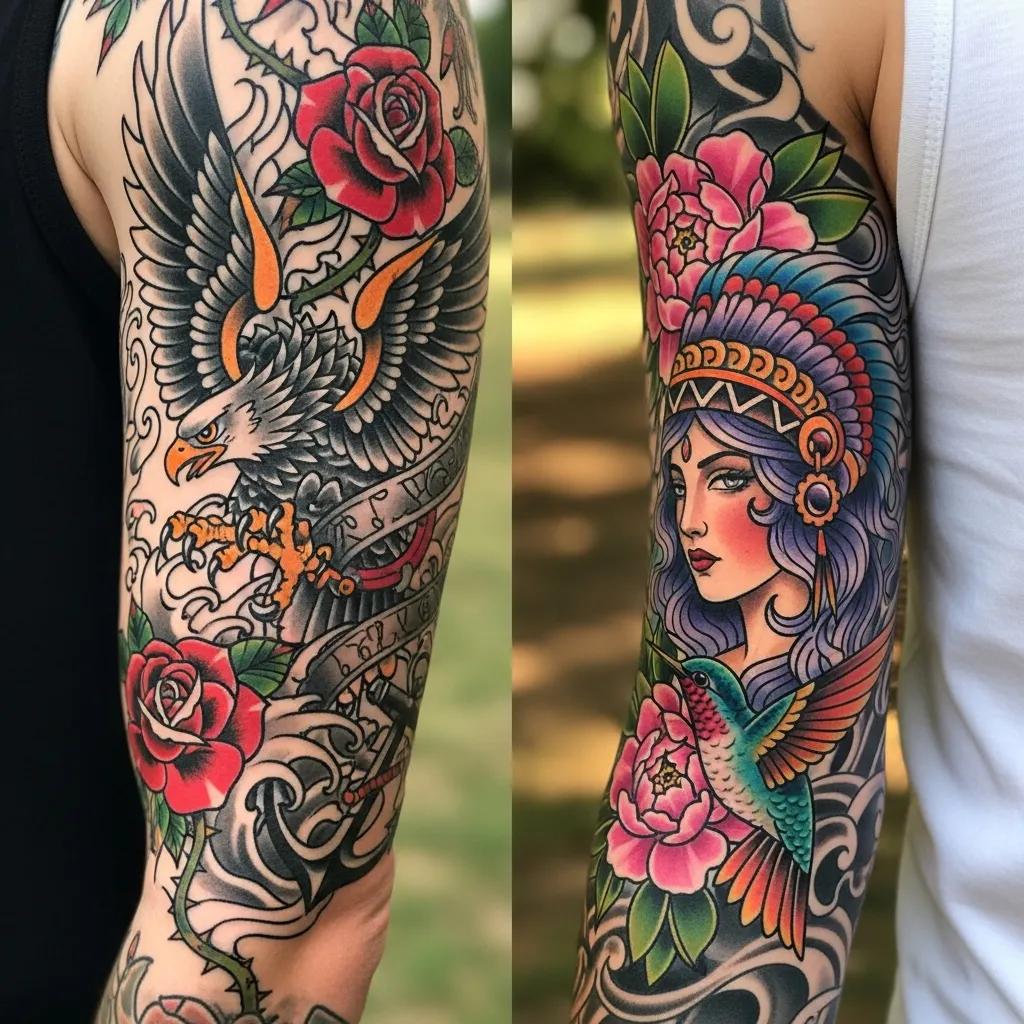
Neo-traditional tattooing is what happens when the best ideas from American traditional meet the techniques and ambitions of contemporary illustration. It keeps the bold outlines and structural durability that make traditional tattoos age well, then adds the shading depth, color range, and compositional complexity that modern illustration demands. The result is a style that looks as good on the wall of a gallery as it does on skin, and holds up over decades because the underlying structure was designed to last.

This guide covers what neo-traditional tattooing is, how it differs from traditional and other styles, what subjects and compositions work best, and what to look for in an artist who does it well.

What Makes Neo-Traditional Different from Traditional

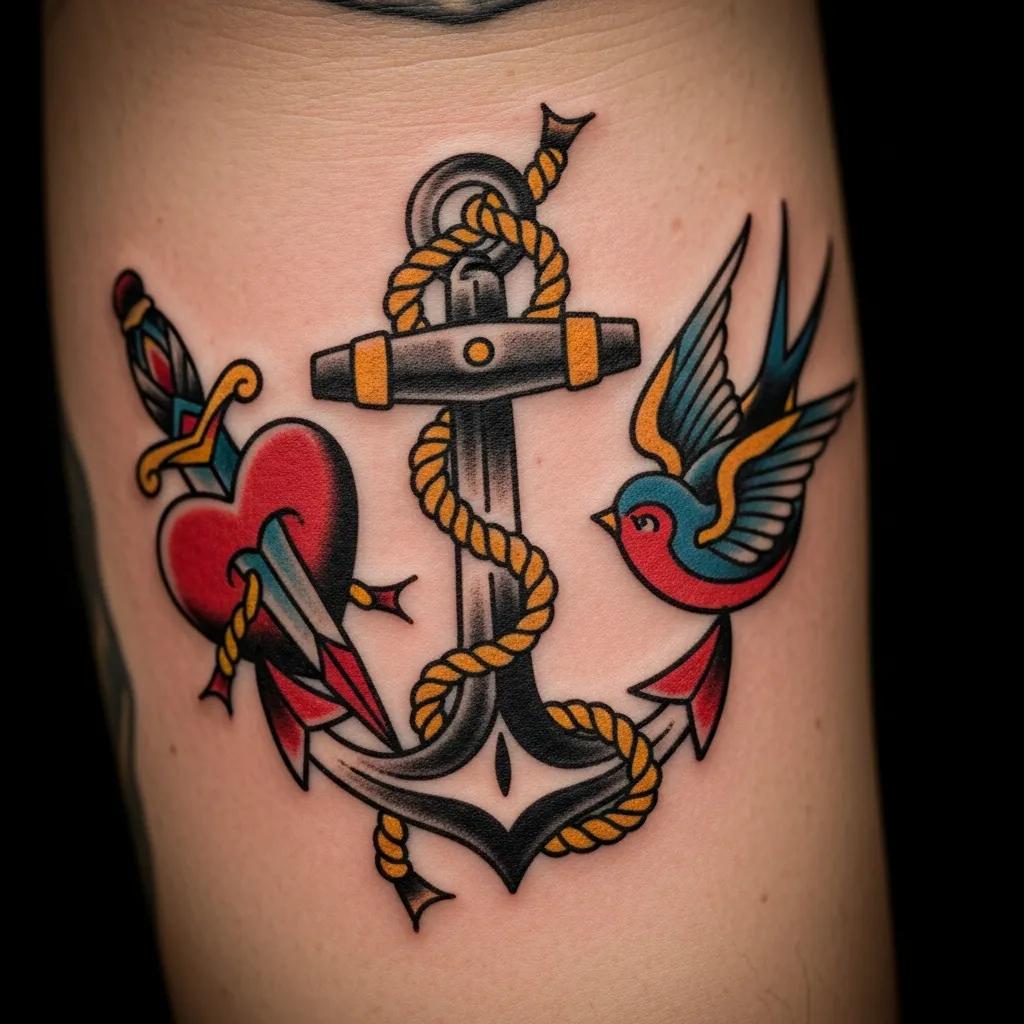
Traditional American tattooing (also called old school) is defined by three things: bold black outlines, a limited color palette (red, green, yellow, blue, black), and iconic flat-shaded imagery. The style was standardized by artists like Sailor Jerry, Bert Grimm, and Ed Hardy in the mid-20th century. It is the foundation of Western tattoo art, and it remains the most durable style on skin because those bold lines resist the blurring that thinner lines experience over time.

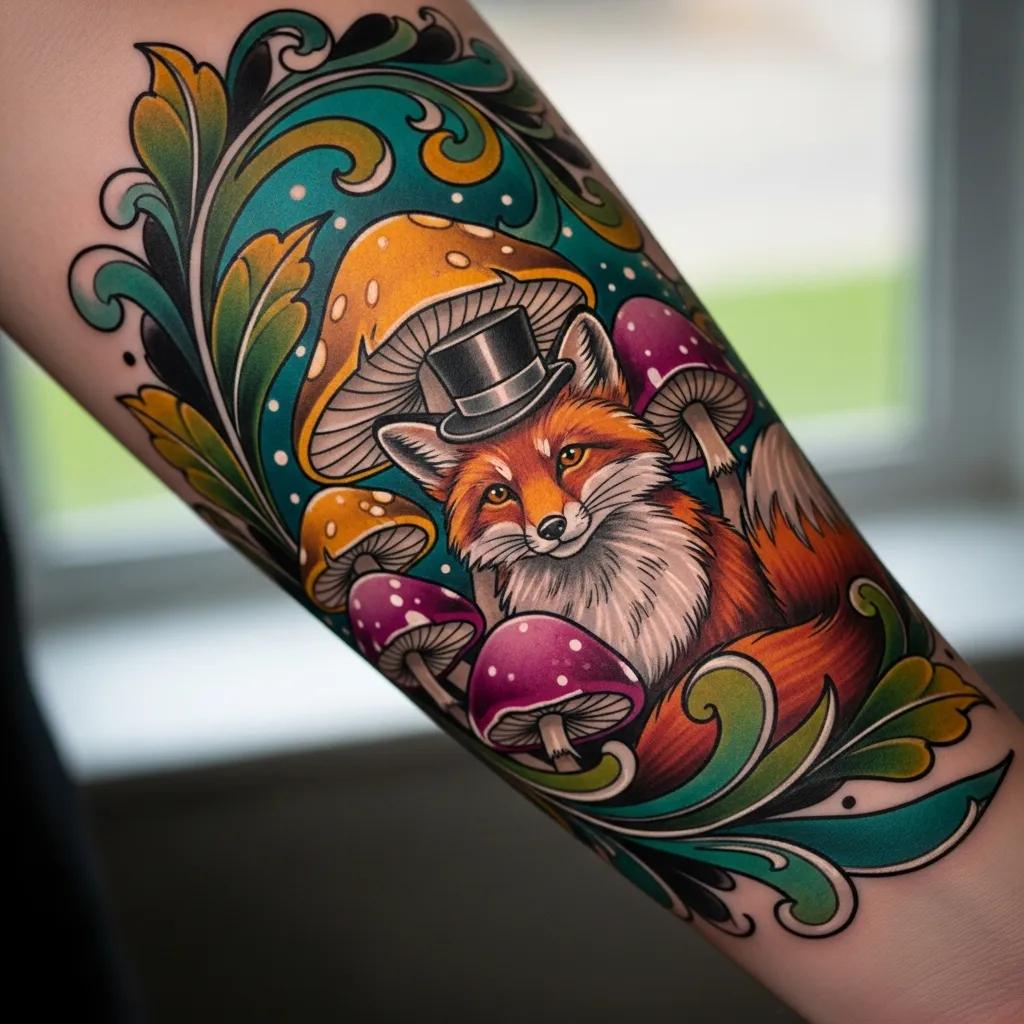
Neo-traditional keeps the bold outline foundation but opens up everything else. The color palette expands to include purples, teals, pinks, magentas, and warm earth tones. The shading moves from flat fills to complex gradients, smooth blends, and layered depth. The compositions become more complex, more detailed, and more influenced by fine art illustration than by the flash sheets of mid-century tattoo parlors.

The comparison is like the difference between a folk song and a full orchestral arrangement of the same melody. The structure is there. The expression is different.

Why Neo-Traditional Ages Well

Tattoo longevity comes down to line weight and saturation. Thin lines blur. Light colors fade. Bold lines hold. Saturated colors last.

Neo-traditional inherits traditional's bold outlines, which means the structural integrity of the tattoo is preserved for decades. The outlines prevent the shading and color from bleeding into each other as the tattoo ages. The heavier saturation of neo-traditional color fills resists fading better than the lighter washes used in watercolor or fine line styles.

At 10 years, a well-executed neo-traditional tattoo looks like a slightly mellowed version of itself. At 20 years, the lines are still defined and the colors, while softened, still read clearly. This longevity is one of the main reasons collectors choose neo-traditional for pieces they want to carry for life.

Common Neo-Traditional Subjects

Neo-traditional handles a wide range of subjects, but certain categories are signature to the style.

Animal portraits. Wolves, bears, eagles, owls, foxes, snakes, and big cats rendered with detailed fur or feather texture, expressive eyes, and decorative framing. The animal is often surrounded by botanical elements, geometric borders, or ornamental backgrounds that give the composition depth and visual richness.

Floral compositions. Roses, peonies, chrysanthemums, and wildflower arrangements rendered with layered petals, gradient shading, and rich color. Neo-traditional florals are more detailed and dimensional than traditional flat-shaded roses.

Skull and mortality imagery. Skulls framed by flowers, snakes, daggers, hourglasses, and candles. The contrast between death imagery and living elements (flowers, butterflies, birds) is a neo-traditional signature that traces directly back to traditional memento mori but renders it with modern sophistication.

Mythological and fantasy figures. Greek gods, Norse mythology, mythical creatures, and fantasy-influenced characters. Neo-traditional's expanded color palette and shading depth make these subjects come alive in ways that flat traditional rendering cannot achieve.

Nature scenes. Landscapes, seascapes, mountain vistas, and forest scenes framed within ornamental borders or shaped canvases (diamonds, circles, triangular compositions). These require an artist who can manage depth, atmosphere, and scale within the neo-traditional framework.

Portrait-influenced work. Not photorealistic portraits, but stylized depictions of faces, figures, and characters with neo-traditional line weight and color approach. Pin-up figures, historical icons, and fictional characters are common subjects.

Composition and Placement

Neo-traditional thrives at medium to large scale. The style's detail and color depth need room to breathe. Pieces that are too small lose the compositional complexity that defines the style.

Upper arm. One of the most popular placements. The deltoid and bicep offer a curved canvas that neo-traditional compositions wrap around naturally. Half-sleeve and three-quarter-sleeve projects in neo-traditional are some of the most visually striking work in any style.

Forearm. Interior and exterior forearm both work well. The forearm is visible, which makes it a good showcase for the color and detail that neo-traditional delivers.

Thigh. The thigh offers one of the largest flat surfaces on the body and is ideal for highly detailed neo-traditional compositions. It is also one of the less painful placements, which helps during longer sessions.

Calf. The calf wraps slightly, which adds dimension to compositions that the artist can design around. A neo-traditional piece that wraps the calf reads differently from every angle.

Chest and back. Larger canvas for larger compositions. Chest panels and back pieces in neo-traditional are multi-session projects that reward planning and patience with some of the most impressive tattoo work possible.

Smaller placements (wrist, behind ear, ankle) can work for simplified neo-traditional designs, but the style's real strength shows at 4 inches and larger.

What to Look for in a Neo-Traditional Artist

Neo-traditional requires specific skills that not every tattoo artist has developed. When evaluating an artist's portfolio, look for:

Clean, consistent outlines. The bold lines should be uniform in weight, smooth in flow, and confident in execution. Wobbly or inconsistent outlines undermine the entire piece.

Smooth color gradients. Neo-traditional shading should transition smoothly from light to dark without visible banding or patchiness. The blending technique is what separates good neo-traditional from mediocre neo-traditional.

Saturated color. The colors should be rich and fully packed into the skin. Thin, washy color in a neo-traditional piece means the artist is not packing the ink deeply enough, and the tattoo will fade faster than it should.

Compositional depth. Does the portfolio show pieces with foreground, midground, and background? Neo-traditional compositions should have visual depth, not just flat imagery with bold outlines.

Range of subjects. An artist showing only one subject (all roses, or all skulls) may be working from a narrow comfort zone. Look for diversity in subject matter within the neo-traditional framework.

Healed work. Ask to see healed photos at 6 months or a year. Healed neo-traditional should retain its color saturation and line definition. If the healed photos show significant fading or line blur, the technique has issues.

Neo-Traditional in Hot Springs

Neo-traditional is one of the most requested styles at Spa City Ink, and the studio has artists on the team whose primary specialization is in this lane. The style draws clients from across Central Arkansas: Little Rock, Conway, Benton, Bryant, Malvern, Arkadelphia, and the surrounding communities of Pearcy, Lonsdale, Lake Hamilton, and Garland County.

The concentration of neo-traditional expertise in Hot Springs means clients do not need to travel to a major metro (Dallas, Memphis, Nashville) for high-quality neo-traditional work. The artists at Spa City Ink produce neo-traditional at a level that competes with studios in much larger markets, at pricing that reflects the Hot Springs cost of living rather than a big-city overhead structure.

Getting a Neo-Traditional Tattoo

The process starts with a consultation. Bring reference images that show the style, the subjects, and the compositions that appeal to you. Discuss placement and size with the artist. For neo-traditional, bigger is almost always better because the detail and color depth need space.

Expect the design phase to take time. Neo-traditional compositions are complex, and the drawing process reflects that. A good neo-traditional design is not rushed.

Spa City Ink is at 1542 Central Ave, Hot Springs, AR 71901. To book a neo-traditional consultation, call 501-620-4150 or visit spacityink.com. Request the artist whose portfolio matches your vision.
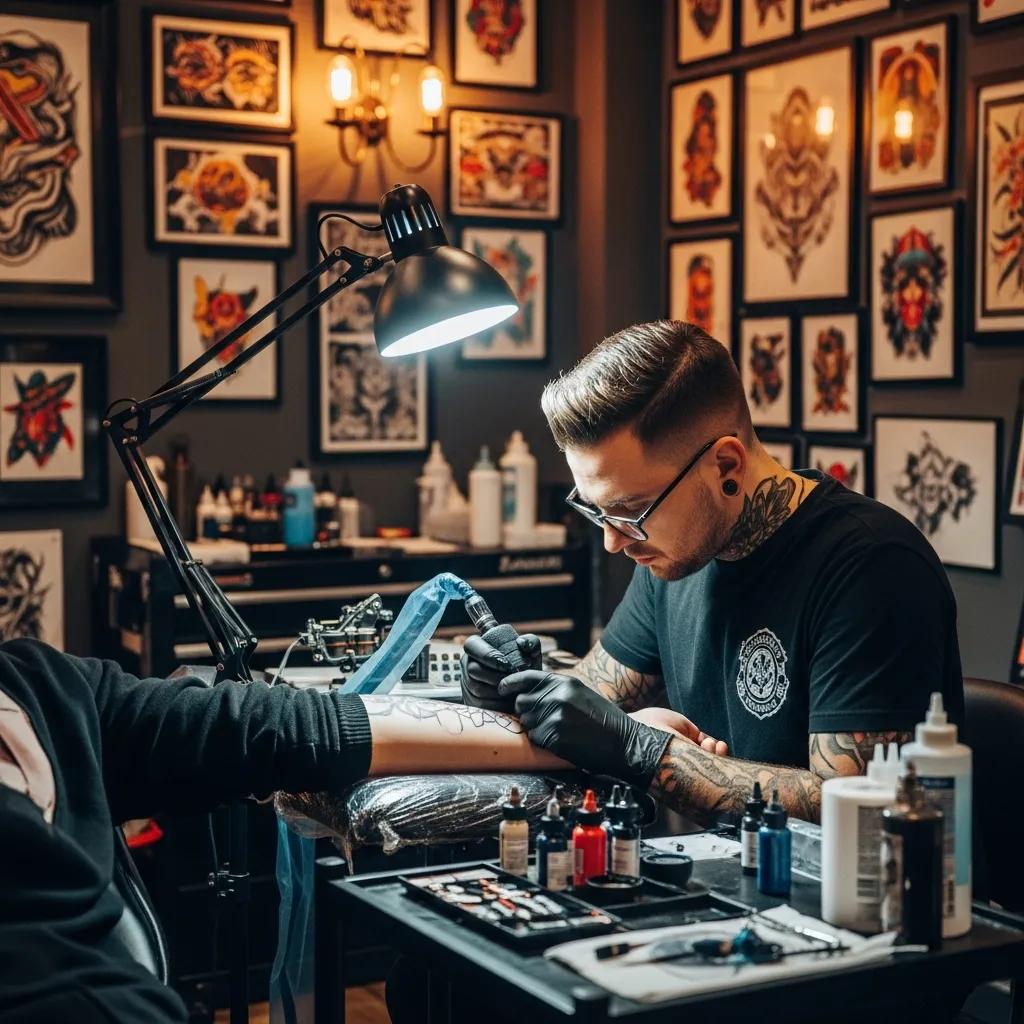
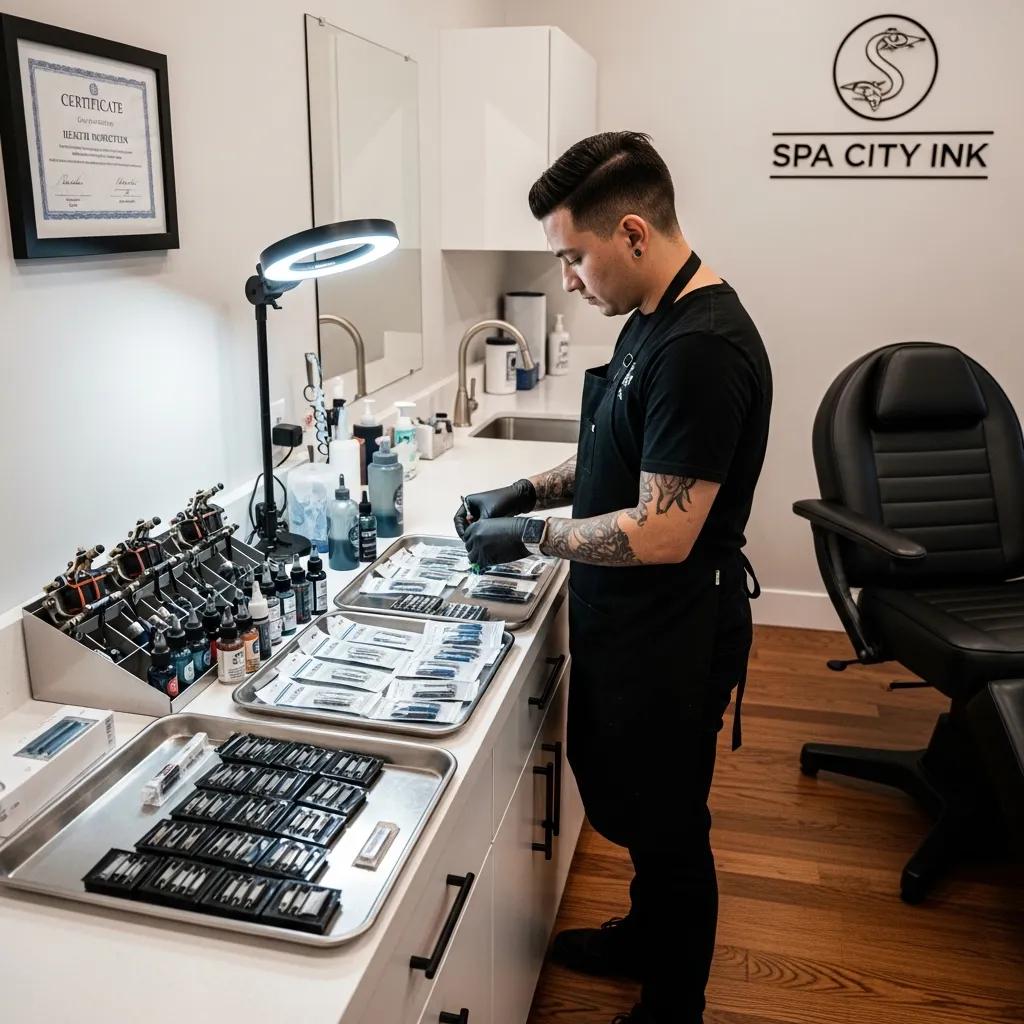
Tattoo Artists in Hot Springs, AR: Meet the Spa City Ink Team

A tattoo studio is only as good as the artists who work in it. The building, the location, the Instagram following, the reviews: all of those point toward the work, but the work itself comes from the hands and the eyes of individual artists. At Spa City Ink, eight artists bring different specializations, different influences, and different artistic backgrounds to the same studio. That range is by design. It means almost any style a client walks in wanting can be matched to someone on the team who does that style at a high level.

This page introduces the team, the styles they cover, and how to find the right artist for your specific tattoo.

Why Multiple Artists Matter

A one-artist studio can be excellent, but it can only be excellent at one thing. If that artist's strength is traditional and you want fine line, you are either getting a compromise tattoo or driving somewhere else.

A multi-artist studio with genuine style diversity means the studio can match the client to the right artist rather than asking the client to adapt their vision to whoever is available. This matching is the most important decision in the tattoo process, and it happens before the first line is drawn.

At Spa City Ink, the eight-artist roster covers traditional, neo-traditional, fine line, illustrative, blackwork, custom lettering, and realism. Clients driving from Little Rock, Conway, Benton, Bryant, Malvern, or Arkadelphia can identify the artist whose portfolio best matches their vision before making the trip.

Style Specializations on the Team

Traditional American. Bold lines, classic imagery, and a color palette rooted in the original American tattoo tradition. Eagles, roses, daggers, ships, anchors, pin-ups. This style is the backbone of tattoo art, and the artists on the team who work in this lane have the bold, confident hand that traditional requires.

Neo-traditional. Everything traditional offers with more complex shading, expanded color palettes, and contemporary subjects. Floral compositions, animal portraits with decorative framing, and stylized imagery that blends old-school structure with modern illustration. Neo-traditional is one of the most requested styles at the studio and one of the styles that draws clients from across the region.

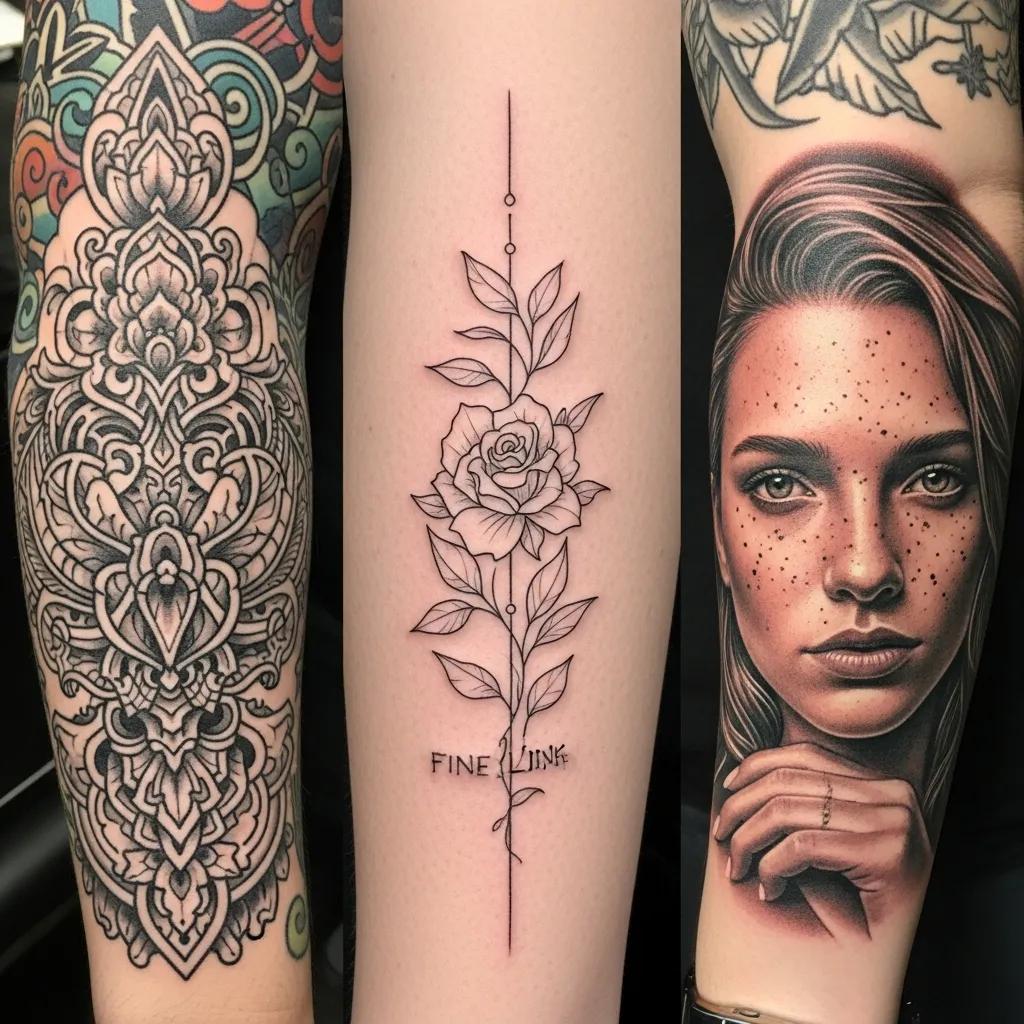
Fine line. Single-needle and small-grouping work for delicate, detailed tattoos. Botanical illustrations, script, minimalist symbols, micro-realism, and continuous-line drawings. Fine line requires a specific technical skill set, and the artists who offer it at Spa City Ink specialize in the style rather than offering it as an add-on to other work.

Illustrative. Drawing-influenced tattoos that borrow from fine art, editorial illustration, and graphic design. Compositions that feel like artwork translated onto skin. Watercolor effects, sketch-style linework, surrealist imagery, and art-deco-influenced pieces fall into this category.

Blackwork. Solid black ink, geometric patterns, mandalas, ornamental designs, and heavy dotwork. Bold, graphic, and striking. Blackwork demands precision in line weight and pattern consistency, and the results are some of the most visually impactful tattoos in any style.

Custom lettering and script. Typography and hand-lettered text. Names, dates, quotes, lyrics, and phrases designed as custom typography rather than picked from a standard font. Good lettering work considers spacing, weight, flow, and how the text reads on the body's curves.

How to Choose the Right Artist

The process is simpler than it seems. Three steps:

Know your style. What kind of tattoo do you want? Look at the style descriptions above and identify which one matches your vision. If you are not sure, browse the studio's social media and save the pieces that appeal to you. The style that keeps appearing in your saves is probably your style.

Browse individual portfolios. Each artist at Spa City Ink maintains a portfolio of their work. Look for the artist whose portfolio shows the style you want, executed at a level you are confident in. Check for consistency, range within the style, and healed work.

Book with that specific artist. When you call or message the studio, request the artist by name. This ensures your piece is done by the person whose portfolio convinced you, not whoever happens to be available. For custom work, the consultation and design process happens with your chosen artist.

What the Team Brings from 17 Years

Spa City Ink has been operating on Central Avenue since 2008. Over 17 years, the studio has built a team through a combination of homegrown talent and artists who have joined from other studios and markets. That mix of perspectives strengthens the work across the team.

Artists who have worked together for years develop a shared standard. They see each other's work daily. They critique and learn from each other. The quality floor in a studio with a strong team culture is higher than in a studio where artists work in isolation.

The team's collective experience also means the studio has handled nearly every type of project: cover-ups, complex multi-session sleeves, memorial pieces, first tattoos on nervous clients, and everything between. That institutional experience translates into a smoother process for the client.

The Studio Environment

The physical space matters because you are going to be in it for hours if you are getting a larger piece. Spa City Ink's studio on Central Avenue is a professional working environment: clean, well-lit, organized, and set up for client comfort and artist precision.

Each artist has their own station. Sterilization protocols follow Arkansas health department requirements and the studio's own standards. Single-use needles and tubes. Autoclaved equipment. Surfaces cleaned between every client. Gloves changed as needed throughout the session.

The environment is welcoming without being casual. The team takes the craft seriously, and the studio reflects that. First-timers consistently report feeling more at ease than they expected, which is a reflection of how the team manages the experience.

Walk-Ins and Appointments

Walk-ins are welcome at Spa City Ink when chairs are available. Walk-ins work best for smaller pieces, flash, and straightforward custom work. If you are in Hot Springs for the day (or visiting from Pearcy, Lake Hamilton, Jessieville, or the Village) and want to get tattooed, calling ahead to check availability improves your chances of getting in.

Appointments are recommended for custom work, larger pieces, and any project where you want a specific artist. Appointments include the consultation and design phase, which gives the artist time to create the best possible piece for you.

Clients from Across Central Arkansas

The studio draws clients from a wide geographic area. Hot Springs locals make up the core, but a significant portion of the clientele travels from surrounding communities and cities. Little Rock, Conway, Benton, Bryant, Malvern, Arkadelphia, Sheridan, Maumelle, and Caddo Valley are all represented in the client base.

The reason is straightforward: the concentration of style diversity in one studio, combined with 17 years of reputation and over 400 reviews, makes the drive worthwhile for anyone who cares about the quality and originality of their tattoo.

For out-of-town clients, the consultation can happen remotely (phone, email, social media). The design phase happens before the travel day. The client arrives for the session with the design already approved and the stencil ready.

Connect with the Team

Spa City Ink is at 1542 Central Ave, Hot Springs, AR 71901. Eight artists. Traditional, neo-traditional, fine line, illustrative, blackwork, and custom styles.

To browse artist portfolios, visit spacityink.com or follow the studio on social media. To book with a specific artist, call 501-620-4150 and request them by name.

Tattoo Aftercare Guide: How to Protect Your New Ink

A tattoo is only as good as how it heals. The artist can execute a perfect design with flawless technique, and the client can still ruin it in the first two weeks with bad aftercare. The healing phase is where the ink settles into the skin permanently, and what you do during those days determines whether the tattoo looks as good at six months as it did walking out of the shop.

This guide covers the full aftercare process from the moment you leave the chair to the point where the tattoo is fully healed, including the common mistakes that cause problems and the signs that something needs attention.

The First Few Hours

Your artist will cover the fresh tattoo with either a traditional bandage (plastic wrap or a gauze pad) or a transparent adhesive film (Saniderm, Tegaderm, or a similar medical-grade product). The covering protects the fresh tattoo from bacteria, friction, and debris during the initial weeping stage.

If your artist used adhesive film: Leave it on for the duration your artist specified, typically 24 to 72 hours. The film creates a sealed environment that lets the tattoo begin healing without exposure to outside contaminants. Fluid, ink, and plasma will collect under the film. This looks alarming but is completely normal. The film is doing its job.

If your artist used a traditional bandage: Remove it after 2 to 4 hours (or per your artist's instructions). Traditional bandages do not seal the way adhesive films do, so they come off sooner.

If you drove from Benton, Little Rock, or Malvern for your appointment, the covering stays on for the drive home. Do not remove it in the car. Wait until you are in a clean environment where you can properly wash the tattoo.

First Wash

When the covering comes off, wash the tattoo immediately. Use lukewarm water (not hot) and a fragrance-free, dye-free liquid soap. Cetaphil, Dial Gold (fragrance-free version), and Dr. Bronner's unscented are common choices.

Wash gently with clean hands. No washcloths, no sponges, no loofahs. These introduce bacteria and create friction that damages the fresh tattoo. Gently rub the surface to remove any dried plasma, blood, or excess ink. The tattoo will feel slimy. That is normal.

Rinse thoroughly. Pat dry with a clean paper towel. Not a bath towel. Bath towels harbor bacteria and their texture is too rough for a fresh tattoo. Paper towels are single-use and sterile enough for the job.

Days 1 Through 3: The Fresh Phase

The tattoo is essentially an open wound during this phase. Treat it accordingly.

Wash the tattoo 2 to 3 times per day with the same fragrance-free soap. Pat dry each time. After each wash, apply a very thin layer of fragrance-free moisturizer. Aquaphor (very thin, barely there), CeraVe moisturizing cream, or a tattoo-specific aftercare product like Hustle Butter or After Inked. The emphasis is on thin. A thick layer traps moisture, suffocates the skin, and creates an environment for bacterial growth.

The tattoo will be red, slightly swollen, and warm to the touch. It may weep clear fluid or small amounts of colored ink. All of this is normal during the first 72 hours.

Sleep with the tattoo uncovered if possible. If you are concerned about staining sheets, wear loose, clean clothing over the area or lay a clean towel on the bed. Do not re-wrap the tattoo in plastic wrap after the initial covering is removed unless your artist specifically told you to.

Days 4 Through 14: The Peeling Phase

This is the phase where most aftercare mistakes happen.

The tattoo will begin to peel, flake, and itch. The peeling looks like a sunburn: thin layers of skin lift and come off. Some flakes will have color in them. This does not mean the tattoo is falling out. The outer layer of damaged skin is shedding while the ink remains set in the dermis below.

Do not pick, scratch, or peel. This is the single most important aftercare rule. Picking at peeling skin pulls ink out of the dermis and creates patchy, uneven healing. The result is spots where the ink is missing, lines that are broken, and colors that are inconsistent. Every tattoo artist has seen the result of picking, and it always requires a touch-up that would not have been necessary otherwise.

Do not scratch. The itching can be intense. Managing it: apply moisturizer (the moisture reduces the itch), gently slap the area (not hard, just enough to override the itch sensation), or use a clean damp cloth laid over the area. Do not scratch with fingernails.

Continue washing and moisturizing 2 to 3 times daily through this phase. The peeling typically resolves by day 10 to 14.

Weeks 3 Through 6: The Settling Phase

After the peeling stops, the tattoo enters a settling phase. The surface looks healed, but the deeper layers of skin are still repairing. During this period:

The tattoo may look slightly dull or cloudy compared to how it looked fresh. This is normal. A thin layer of new skin has formed over the ink. As the skin fully matures over the next few weeks, the tattoo brightens and the final appearance emerges.

Continue moisturizing daily. Sunscreen (SPF 30 or higher) should be applied to the tattoo whenever it will be exposed to sun. UV exposure is the single biggest cause of tattoo fading over a lifetime, and the protection starts as soon as the tattoo is healed enough for sunscreen (typically after the peeling phase is complete).

What to Avoid During Healing

Swimming. No pools, hot tubs, lakes, rivers, or ocean for at least 2 weeks. Standing water introduces bacteria to the healing wound. Chlorine can irritate the fresh tattoo and affect color retention.

Direct sun exposure. Keep the healing tattoo out of direct sunlight for the first 4 weeks. After healing, sunscreen every time the tattoo sees sun. A tattoo protected from UV will look better at 10 years than an unprotected tattoo looks at 3.

Gym and heavy sweating. Sweat is salty and can irritate a fresh tattoo. Heavy exercise also increases blood flow to the area, which can cause additional swelling and weeping. Light activity is fine after a few days. Heavy lifting, running, and intense workouts should wait 48 to 72 hours for most placements.

Tight clothing over the tattoo. Tight fabric rubbing against a fresh tattoo causes irritation and can pull at peeling skin. Wear loose clothing over the area for the first 2 weeks.

Scented products. No scented lotions, soaps, or sprays on or near the healing tattoo. Fragrance chemicals irritate healing skin and can cause reactions.

Signs Something Is Wrong

Most tattoos heal without complications. Occasionally, something needs attention.

Normal: Redness around the tattoo for the first few days. Mild swelling. Clear or slightly colored fluid weeping. Peeling and flaking. Itching. Slight tenderness.

Not normal: Redness that spreads outward from the tattoo in streaks. Increasing pain after the first 48 hours (should be decreasing, not increasing). Pus (thick, yellow or green discharge, as opposed to clear lymph fluid). Fever. Hot, hard swelling that does not improve. Raised bumps or rash around the tattoo.

If you experience any of the "not normal" signs, contact your tattoo artist first. They have seen healing complications and can often identify whether it is a normal variation or something that needs medical attention. If it looks infected (pus, fever, spreading redness), see a doctor. Tattoo infections are uncommon but they are real and they require medical treatment.

Long-Term Tattoo Care

After the tattoo is fully healed (6 to 8 weeks), the ongoing care is simple:

Sunscreen. SPF 30 or higher on the tattoo whenever it is exposed to sun. This is the single most impactful thing you can do for the longevity of the tattoo. Ink fades from UV exposure more than from any other factor.

Moisturize. Keeping the skin hydrated keeps the tattoo looking vibrant. Regular lotion is fine after healing is complete.

Touch-ups. Some tattoos need a touch-up after healing, especially in tricky areas or on fine detail work. Most studios offer free or discounted touch-ups within a window (30 to 90 days). If spots need attention, schedule the touch-up sooner rather than later.

Aftercare Products

There are many tattoo aftercare products on the market. Most of them work fine. The ones that matter are fragrance-free, gentle, and designed for sensitive or healing skin. Popular choices among artists and clients:

Aquaphor Healing Ointment (use sparingly, thin layer only). CeraVe Moisturizing Cream (fragrance-free). Hustle Butter Deluxe (tattoo-specific). After Inked (tattoo-specific). Lubriderm Daily Moisture (fragrance-free version).

What you use matters less than how you use it. Thin layers, consistent application, fragrance-free. Those three rules cover 90 percent of successful aftercare.

Aftercare at Spa City Ink

Every client at Spa City Ink receives aftercare instructions from their artist after the session. The studio has been guiding clients through healing since 2008, and the aftercare protocol is refined from thousands of healed tattoos across every style and placement.

If you have questions during healing, contact the studio. Whether you are in Hot Springs, out in Pearcy or Lonsdale, or back home in Conway or Arkadelphia after your appointment, the team is available to answer aftercare questions and assess healing concerns.

Spa City Ink is at 1542 Central Ave, Hot Springs, AR 71901. Call 501-620-4150 or visit spacityink.com.

Custom Tattoo Design in Hot Springs: How the Process Works

A custom tattoo starts with an idea and ends with something that exists nowhere else in the world. That is the point. Custom work is not about selecting from a book of pre-drawn designs. It is about working with an artist to create a piece that reflects your vision, fits your body, and stands on its own as original art. The process takes more time than picking flash, costs more, and requires a different kind of engagement between client and artist. The results justify every part of it.

This guide covers how the custom tattoo design process works, what to expect at each stage, and how to get the best outcome from the collaboration.

What Custom Means vs Flash

Flash tattoos are pre-drawn designs displayed on the shop walls or in an artist's portfolio. They are available to anyone and can be tattooed multiple times on different people. Flash is a legitimate form of tattoo art, and many classic tattoo images started as flash. Choosing flash does not mean choosing lesser work.

Custom means the design is created specifically for you. The artist draws it based on your input, your references, your body placement, and the collaborative conversation between the two of you. No one else has the same piece.

The custom process adds a design phase before the tattoo session. That design phase is where the idea becomes a stencil, and it is where the most important decisions happen.

Starting the Conversation

The custom design process begins with a consultation. This can happen in person at the studio or remotely (phone, email, or social media message). For clients driving from Little Rock, Conway, Benton, or Arkadelphia, a remote consultation lets you align with the artist before making the trip to Hot Springs for the session.

What to bring to the consultation:

Reference images. The most useful communication tool. Save 5 to 10 images that capture elements of what you want: the style, the mood, the subject, the level of detail, the color palette. The artist does not copy these images. They use them to understand your taste and direction.

Subject and meaning. What is the tattoo about? A memorial, a personal symbol, a pure aesthetic choice, a cultural reference, a chapter marker? The meaning does not have to be deep, but knowing it helps the artist make design decisions that resonate beyond the visual.

Placement and size. Where on the body? How large? Placement affects composition, detail level, and how the tattoo ages. The artist will have opinions on this, and their opinions are informed by thousands of hours of experience with how ink sits on skin in different areas.

Style preference. Fine line? Neo-traditional? Illustrative? Blackwork? Traditional? The style determines which artist at the studio is the best fit for your piece. A consultation with the wrong artist for the style you want wastes both of your time.

The Design Phase

After the consultation, the artist begins drawing. This happens between sessions, not while you wait. Depending on the complexity of the piece and the artist's schedule, the design phase takes days to a few weeks.

Some studios show the design in advance (sent digitally for review and feedback). Others reveal the design on the day of the appointment. Ask about the studio's practice during the consultation so you know what to expect.

At Spa City Ink, the design process is collaborative. The artist creates the initial concept from your references and the consultation conversation. You provide feedback. The artist refines. By the time the stencil goes on your skin, the design has been reviewed and approved.

One round of revision is standard. Major changes to direction (switching styles, changing the subject entirely, significantly altering the composition) may require additional consultation and may affect the timeline.

Design Day: Stencil to Skin

On the day of the appointment, the artist applies the stencil to your skin. This is the moment where the design meets the body, and it is the most important review point in the entire process.

Look at the stencil in a mirror. Check the size, the placement, the orientation, and how it flows with your body's contours. Move your arm, twist your torso, bend your leg. See how the stencil looks in motion, not just standing still in one position.

If anything feels off, say so. The stencil can be repositioned, resized, or adjusted. This is the last easy change before ink. A professional artist expects this step to take as long as it needs to take. Rushing the stencil approval to "get started" is a mistake that shows up permanently.

What Custom Work Costs

Custom tattoos are priced by the hour for larger pieces and by the piece for smaller work. In Hot Springs, hourly rates for custom work typically run $100 to $200 per hour depending on the artist's experience and the studio.

The design phase is sometimes included in the session price and sometimes charged separately as a drawing fee. Ask during the consultation. A drawing fee (typically $50 to $150 depending on complexity) compensates the artist for the hours spent designing before the session begins.

Deposits hold the appointment and are applied to the final price. Standard deposits in Hot Springs run $50 to $100.

For clients in Malvern, Bryant, or Pearcy comparing pricing across studios, remember that custom pricing reflects the design time, not just the chair time. A lower hourly rate with a separate drawing fee may end up comparable to a higher hourly rate that includes the design.

Multi-Session Custom Projects

Larger custom work (half sleeves, full sleeves, back pieces, thigh panels) takes multiple sessions. This is normal and expected. The sessions are typically spaced 2 to 4 weeks apart to allow healing between stages.

A multi-session project is planned as a whole but executed in stages. The artist maps the entire composition during the design phase, then works section by section across sessions. Outlining often happens first, then shading and color in subsequent sessions.

Communication between sessions matters. If something about the healing, the placement, or the direction concerns you, contact the artist before the next session rather than waiting. Adjustments are easier between sessions than after new work is layered on top.

Finding the Right Artist for Custom Work

The most important decision in custom work is the artist. Not the shop, not the price, not the location. The artist.

Look at the artist's portfolio for custom work specifically. Many portfolios mix flash and custom. The custom pieces show the artist's ability to create original compositions, interpret a client's vision, and execute complex designs.

Look for range within their style. An artist who shows custom neo-traditional should show different subjects, compositions, and color approaches within that style. An artist who shows only one type of custom piece may be working from a narrow range.

Ask for healed photos of custom work. Fresh custom tattoos look impressive. Healed custom tattoos show whether the design and execution hold up over time.

Remote Consultations for Out-of-Town Clients

For clients in Little Rock, Conway, Sheridan, Maumelle, Caddo Valley, or other areas outside Hot Springs, the consultation phase can happen remotely. Email reference images, describe the concept, specify the placement and size, and the artist can begin the design process before you travel to Hot Springs for the session.

Remote consultations work well for clients who know what they want and can communicate it through references and description. They work less well for clients who need to see the portfolio in person, discuss options in real time, or are still deciding on the concept.

Custom Tattoo Design at Spa City Ink

Custom design is the core of what Spa City Ink does. Eight artists with specializations across traditional, neo-traditional, fine line, illustrative, blackwork, and custom styles. The studio has been creating original tattoo art on Central Avenue in Hot Springs since 2008.

Clients travel from across Central Arkansas for custom appointments: Little Rock, Conway, Benton, Bryant, Malvern, Arkadelphia, Lonsdale, Lake Hamilton, and beyond. The design process starts with a consultation and ends with a piece that belongs to you alone.

To start a custom design conversation, call 501-620-4150, visit spacityink.com, or message the studio on social media with your references and ideas.

First Tattoo Tips: What to Expect at Spa City Ink

Getting your first tattoo is a bigger decision than most people let on. The internet makes it look casual: scroll, pick, sit, done. The reality has more steps, more choices, and more things that matter than a quick scroll suggests. The good news is that the process is straightforward once you know what to expect, and the nerves that most first-timers feel are almost always worse than the actual experience.

This guide covers what to do before, during, and after your first tattoo, written from 17 years of watching first-timers walk into Spa City Ink and walk out with something they are proud of.

Before the Appointment

Decide what you want before you decide where to get it. The most common first-timer mistake is picking a shop before picking a design direction. Start with the idea. What style appeals to you? What subject? What size? What placement? Once you have answers to those questions, finding the right artist becomes straightforward because you are matching the artist's strengths to your vision.

Collect reference images. Save photos, drawings, and examples that capture elements of what you want. You do not need to find the exact tattoo. You need to show the artist the direction: the mood, the scale, the style, the level of detail. Five good reference images communicate more than a paragraph of description.

Choose placement carefully. Your first tattoo placement affects your experience significantly. Areas with more muscle and fat (upper arm, thigh, calf, shoulder) hurt less than areas with thin skin over bone (ribs, collarbone, spine, ankle, fingers). For a first tattoo, a less painful placement lets you focus on the experience rather than endurance.

Eat a real meal before your appointment. This is not optional advice. Tattooing causes an adrenaline response and a minor stress reaction. If your blood sugar is low, you are more likely to feel lightheaded or nauseous. Eat a full meal 1 to 2 hours before your session. Bring a snack and water to the appointment.

Hydrate. Well-hydrated skin takes ink better and heals faster. Drink water consistently in the days leading up to the appointment, not just the morning of.

Skip the alcohol. Do not drink the night before or the day of. Alcohol thins the blood, increases bleeding during the session, and makes the tattoo harder for the artist to execute cleanly. Every reputable shop will turn away a client who is visibly intoxicated.

Wear appropriate clothing. Wear something that gives the artist easy access to the area being tattooed without requiring you to be uncomfortable for the duration of the session. If the tattoo is on your ribcage, a button-up shirt is easier than a pullover. If it is on your thigh, loose shorts work better than jeans.

What Happens at the Shop

For first-timers, the unknown is the stressful part. Here is what a typical session looks like at a professional studio.

Paperwork and ID. You will fill out a consent form and show identification. Arkansas requires clients to be 18 or older for tattoos without parental consent. The consent form covers health disclosures, aftercare acknowledgment, and studio policies.

Design review and stencil placement. The artist shows you the final design (drawn from your references and the consultation conversation). You approve the design, and the artist places a stencil on your skin in the agreed location. You look at the stencil in a mirror, confirm the placement, and give the go-ahead. If the placement does not feel right, say so. The stencil can be repositioned as many times as needed. This is the last easy change.

The tattooing. The artist sets up, opens sterile equipment in front of you, and begins. The sensation is often described as a scratching or vibrating feeling, not a sharp stabbing. Most people find it less painful than they expected. The first few minutes are the most intense as your body adjusts. After that, the sensation becomes more manageable.

Duration. A small first tattoo (a simple symbol, a short word, a small flower) might take 15 to 45 minutes. A medium piece (a detailed forearm design) might take 1 to 3 hours. Your artist will give you a time estimate at the consultation.

Breaks. You can ask for a break at any time. Standing up, stretching, drinking water, and resetting are all normal. No professional artist will pressure you to push through if you need a pause.

Pain: The Honest Version

Pain is the number one concern for first-timers, and the honest answer is: it depends on the placement, and it is almost never as bad as people fear.

Lower pain areas: outer upper arm, outer forearm, calf, thigh, shoulder. These areas have more muscle and fat between the needle and the bone. Most first tattoos in these areas are described as uncomfortable but very manageable.

Higher pain areas: inner forearm (closer to the elbow), ribcage, sternum, spine, collarbone, ankle, kneecap, inner bicep, armpit area. Thin skin, less padding, more nerve density.

For a first tattoo, picking a lower-pain placement is a practical choice. You can always get tattooed in a more sensitive area later once you know what the sensation feels like and how your body responds.

Aftercare: The First Two Weeks

Aftercare is where first-timers most often make mistakes that affect how the tattoo heals and how it looks long-term.

Your artist will cover the fresh tattoo with a bandage or a transparent adhesive film (like Saniderm or Tegaderm). Follow your artist's specific instructions on when to remove it. Typical guidance: adhesive film stays on for 24 to 72 hours depending on the brand and the artist's preference. Traditional bandages come off after 2 to 4 hours.

Wash gently. When the covering comes off, wash the tattoo with lukewarm water and a fragrance-free liquid soap. Pat dry with a clean paper towel. Do not rub.

Moisturize. Apply a thin layer of fragrance-free moisturizer or a tattoo-specific aftercare product. Thin layer. Not a thick glob. The tattoo needs to breathe.

Do not pick, scratch, or peel. The tattoo will flake and peel as it heals. This is normal. The worst thing you can do is pick at the peeling skin. Picking pulls ink out of the skin and creates patchy healing.

Avoid submersion. No swimming pools, hot tubs, lakes, or baths for at least 2 weeks. Showers are fine. Standing water introduces bacteria to the healing wound.

Stay out of the sun. Direct sun exposure on a healing tattoo causes fading and can damage the skin. Keep the tattoo covered or out of the sun for the first 2 to 4 weeks. After it is fully healed, sunscreen (SPF 30 or higher) protects the tattoo for the rest of its life.

If you drove from Malvern, Benton, or Arkadelphia for your appointment, the drive home is fine. Keep the covering on as instructed and start the wash routine when your artist says to, not before.

What a First Tattoo Costs

First tattoos are typically small to medium pieces, which puts them in the flat-rate or short-session range at most Hot Springs studios. Expect $80 to $300 for most first tattoos depending on size, detail, and the artist's rate. Minimum charges ($60 to $100) apply at most shops regardless of how small the piece is.

A deposit is standard at most studios. The deposit (usually $50 to $100) holds your appointment and is applied to the final price. Deposits are typically non-refundable if you cancel without notice.

Tipping your artist is customary. 15 to 20 percent is the standard range, same as other personal service industries.

Common First-Timer Questions

Can I bring someone with me? Most shops allow one guest. Check with the studio in advance, especially if the shop is small. Too many people in the work area creates hygiene and space issues.

Can I listen to music or watch something during the session? Usually yes. Headphones and a phone are fine. Some people find music or a show helps them relax during the session. Ask your artist if they have a preference.

What if I do not like the stencil placement? Speak up. The stencil is the preview. It can be moved, resized, or adjusted before any ink touches skin. A good artist wants you to be confident in the placement before starting.

What if I need to stop mid-session? You can stop at any time. The artist can work around a partial session and finish the piece in a follow-up appointment. This is not common for small first tattoos but it happens and it is not a problem.

Do I need a touch-up? Some tattoos need a touch-up after healing, especially in areas where the skin is tricky or the design has very fine details. Most shops offer free or discounted touch-ups within a certain window (30 to 90 days). Ask about the touch-up policy before your session.

Your First Tattoo at Spa City Ink

Spa City Ink has been working with first-timers since 2008. The studio environment is professional, clean, and welcoming. Eight artists with different style specializations means there is someone on the team whose strengths match your vision, whether that is a small fine line piece, a traditional symbol, or a custom design you have been thinking about for years.

Clients come from across Central Arkansas for their first tattoo: Hot Springs locals, visitors from Little Rock and Conway, and people driving from Benton, Bryant, Pearcy, Lake Hamilton, and Garland County. The studio is at 1542 Central Ave, Hot Springs, AR 71901.

To book a consultation for your first tattoo, call 501-620-4150 or visit spacityink.com.

Fine Line Tattoo in Hot Springs: What It Is and Who Does It

Fine line tattooing has gone from niche to mainstream faster than almost any other tattoo style. What started as a specialty associated with single-needle work in Southern California is now one of the most requested styles in studios across the country, including Hot Springs. The appeal is obvious: fine line work is elegant, detailed, and subtle in a way that heavier styles are not. It also requires a specific skill set that not every tattoo artist has.

This guide covers what fine line tattooing actually is, how it differs from other styles, what to know about longevity and placement, and where to find fine line work done well in the Hot Springs area.

What Fine Line Tattooing Is

Fine line tattoos are created using a single needle or a very small grouping of needles (typically a 1RL or 3RL configuration). The result is thin, precise lines that produce detailed work at a scale that heavier needle groupings cannot achieve. The style is defined by its restraint: thin outlines, minimal shading, and designs that rely on precision rather than saturation.

Common fine line subjects include botanical illustrations, script and lettering in delicate typefaces, geometric patterns, minimalist symbols, portraits rendered in linework, animal illustrations, and continuous-line drawings.

The style works because the thin lines create a visual lightness that sits differently on the body than bold traditional work. A fine line botanical on the inner forearm reads almost like a drawing on paper. That subtlety is what draws people to it.

Fine Line vs Other Styles

The difference between fine line and other tattoo styles is primarily in the line weight and the approach to shading.

Fine line vs traditional. Traditional uses bold, thick outlines and flat color fills. Fine line uses hair-thin lines and minimal or no fill. Traditional is designed to be visible from across a room. Fine line reveals its detail up close.

Fine line vs neo-traditional. Neo-traditional shares traditional's bold outlines but adds complex shading and broader color palettes. Fine line strips away the boldness entirely.

Fine line vs realism. Realism uses shading and tone to create photographic depth. Fine line realism exists (micro-realism) but uses linework as the primary tool rather than tonal shading. The result is more illustrative than photographic.

Fine line vs blackwork. Blackwork uses solid black fills and bold graphic patterns. Fine line uses the opposite approach: the least amount of ink needed to define the image.

How Fine Line Ages

This is the question every fine line client should ask and every honest artist should answer directly.

Fine line tattoos do change over time. All tattoos change over time. The difference is in how they change. Bold traditional lines spread a few millimeters over decades but remain clearly defined because the original lines were thick enough to absorb the spread. Fine lines are thinner to begin with, so the same amount of spread represents a larger percentage of the line width.

Practically, this means fine line tattoos at 5 to 10 years will look softer than they did fresh. Very thin lines may blur slightly. Details that relied on the thinnest possible line may lose some definition. The tattoo does not disappear or become unrecognizable. It softens.

Several factors affect how well a fine line tattoo ages. Placement matters: areas with less sun exposure and less friction age better (inner forearm, upper arm, ribcage) than high-friction areas (fingers, hands, feet). Aftercare matters: proper healing preserves line quality. Sun protection matters: UV exposure fades all tattoos, and fine line work shows fading faster than saturated bold work.

A skilled fine line artist accounts for aging in the design. They know which details will hold and which will not. They adjust line weights, spacing, and composition so the tattoo ages gracefully rather than collapsing into a blur.

Best Placements for Fine Line

Fine line works best on areas of the body where the skin is relatively smooth, flat, and low-friction.

Inner forearm. The most popular placement for fine line. The skin is smooth, the surface is flat, and the area is easy to care for during healing. Visible when you want it to be, covered with long sleeves when you do not.

Upper arm and shoulder. Good surface for slightly larger fine line pieces. Less sun exposure than the forearm, which helps with longevity.

Ribcage. Excellent canvas for elongated designs like vertical florals or flowing text. More painful than the forearm but the results are dramatic.

Collarbone and clavicle. Thin, elegant placements that suit fine line's visual weight. Popular for text and small botanical work.

Behind the ear. Very small fine line pieces (moons, stars, tiny symbols) work here. Limited space means limited detail.

Ankle. A classic placement for small fine line work. Be aware that ankles take longer to heal because of lower circulation and shoe friction.

Placements to be cautious with: fingers (high fade rate), palms and soles (skin turnover is too fast for fine detail), and areas with significant stretching potential (inner elbow, back of knee).

Why Fine Line Requires a Specialist

Not every tattoo artist does fine line work well, and an artist who is excellent at traditional or neo-traditional may not have the technique for fine line. The reasons are specific:

The needle configuration is different. Fine line uses single needles or tiny groupings that require different hand pressure, speed, and depth than standard configurations. Too deep and the lines blow out (spread under the skin). Too shallow and the ink does not hold.

The margin for error is smaller. A thick line hides small inconsistencies. A fine line exposes every wobble, every uneven depth, and every hesitation. The artist's hand has to be exceptionally steady.

The design approach is different. Fine line designs must account for how thin lines age, how much detail the skin can hold at a given scale, and how spacing affects readability over time. An artist who designs for bold work will over-detail a fine line piece, and the result at 5 years will be a blur.

For clients in Little Rock, Conway, Benton, or Bryant who want fine line work, it is worth the drive to Hot Springs to find an artist who specializes in the style rather than settling for the nearest studio that offers it as a secondary capability.

What to Bring to a Fine Line Consultation

Reference images are the most useful thing you can bring. Save examples of fine line work that captures the mood, the subject, and the scale you are imagining. The artist does not need to copy these references. They use them to understand your taste and direction.

Be specific about placement and size. A fine line piece that works at 4 inches may not work at 2 inches because the detail cannot be maintained at smaller scales. The artist will help you find the right balance.

Ask the artist how the design will age. A good fine line artist will tell you honestly which elements will hold and which might soften. They may suggest adjustments to the design that improve longevity without compromising the look.

Fine Line at Spa City Ink

Spa City Ink has artists who specialize in fine line work alongside the studio's broader range of traditional, neo-traditional, illustrative, and custom styles. The studio has been on Central Avenue in Hot Springs since 2008, and fine line has been a growing part of the work as the style has gained popularity.

Clients travel from across Central Arkansas for fine line appointments: Little Rock, Conway, Benton, Bryant, Malvern, Arkadelphia, and the surrounding communities of Pearcy, Lonsdale, and Lake Hamilton. The concentration of fine line expertise in Hot Springs makes the drive worthwhile for a style where artist skill matters more than in almost any other category.

To book a fine line consultation, call 501-620-4150 or visit spacityink.com. Walk-ins are welcome for small fine line pieces when chairs are available.

Best Tattoo Shops in Hot Springs, AR: What to Look For

Hot Springs has more tattoo shops per block on Central Avenue than most cities twice its size. That is good for competition and good for quality, but it makes the decision harder for someone who has never been tattooed in the area. Whether you live in Hot Springs, you are visiting from Little Rock or Conway, or you are driving over from Benton or Bryant for a day trip, the shop you choose determines the quality of the tattoo you leave with.

This guide covers what to look for in a Hot Springs tattoo shop, what separates the good ones from the average ones, and what you should know before walking through the door.

What Makes a Tattoo Shop Worth Your Time

A tattoo is permanent. The shop you choose should reflect that permanence in how seriously they take cleanliness, artistry, and client experience. A few things matter more than others.

Cleanliness and sterilization. Every shop in Arkansas is required to follow health department guidelines for sterilization. The basics: autoclaved equipment, single-use needles and tubes, gloves changed between clients, surfaces wiped between sessions, and a clean workspace. These are not differentiators. They are the floor. A shop that does not meet these standards is not a shop you should sit in.

Artist portfolios. Every artist has a style. Some excel at fine line work. Others specialize in bold traditional or neo-traditional. Some are illustrative. Some do photorealistic portraits. The portfolio tells you what the artist is actually good at, not what they say they can do. Look at healed photos, not just fresh work. Fresh tattoos always look sharp. Healed work shows whether the artist understands how ink settles in skin over time.

Years of operation. A shop that has been open for a decade or more has survived the market, built a reputation, and retained enough good artists to stay in business. Longevity is not a guarantee of quality, but it is a filter that removes the shops that could not maintain standards.

Reviews and word of mouth. Google reviews are a starting point. High volume and high ratings together are a reliable signal. A shop with 400 reviews at 4.7 stars has been consistently delivering for a large number of people. A shop with 12 reviews at 5 stars may just be new. For people coming from Malvern, Arkadelphia, or Pearcy, checking reviews before making the drive is worth the five minutes.

Consultation process. A good shop offers consultations before booking custom work. The consultation is where you and the artist align on the design, the placement, the size, and the timeline. A shop that takes your deposit without discussing the design is prioritizing revenue over results.

What to Look for in the Portfolio

The portfolio is the most important thing to evaluate, and most people do not know how to read one. A few things to look for:

Consistency. Is the line work consistently clean across different pieces? Are the colors saturated evenly? Do the compositions feel intentional? Inconsistency across the portfolio means inconsistency on your skin.

Variety within a style. An artist who does fine line should show fine line in different subjects and placements. An artist who does neo-traditional should show different compositions, not the same skull-and-roses repeated. Range within a specialty shows depth.

Healed work. Ask to see healed photos. A tattoo at six months or a year tells you how the artist's technique holds up. Lines that blur, colors that fade unevenly, and details that disappear are technique problems, not skin problems.

Scale and placement. Does the artist show work at different scales? A tiny wrist piece and a full back piece require different skills. Does the portfolio show work on different body parts? Curved surfaces (shoulders, ribs, calves) are harder than flat ones.

Walk-Ins vs Appointments

Most Hot Springs shops accept walk-ins when chairs are available. Walk-ins work well for small, simple pieces: flash designs, small symbols, text, and quick custom work that does not require extensive drawing.

For custom work, larger pieces, or work in a specific style, an appointment is the better path. The appointment gives the artist time to draw the design, prepare the stencil, and plan the session. Rushing custom work to fit a walk-in window usually means compromises that show up in the final piece.

If you are driving from Lake Hamilton, Lonsdale, Jessieville, or anywhere outside immediate Hot Springs, calling ahead to confirm walk-in availability saves you a wasted trip.

Pricing in Hot Springs Tattoo Shops

Tattoo pricing in Hot Springs is generally lower than in larger metro areas like Little Rock, Dallas, or Memphis, but it varies between shops and artists.

Most shops charge either by the piece (for small work) or by the hour (for larger custom work). Hourly rates in Hot Springs typically range from $100 to $200 per hour depending on the artist's experience and the shop's positioning. Small flash pieces might be $80 to $200 as a flat rate. Minimum charges are common, usually $60 to $100.

Price should not be the deciding factor. A $150-per-hour artist who does clean, lasting work is a better investment than a $75-per-hour artist whose lines blur in six months. The tattoo is on your body for decades. The price difference is a rounding error over that timeline.

Styles Available in Hot Springs

The Hot Springs tattoo scene covers the major style categories. Not every shop covers every style, which is why knowing what you want before choosing a shop matters.

Traditional American. Bold outlines, limited color palette, iconic imagery (anchors, eagles, roses, daggers). Ages the best of any style because the bold lines hold structure.

Neo-traditional. Same bold structure as traditional with more complex shading, wider color range, and contemporary subjects. Blends old-school durability with modern artistry.

Fine line. Delicate, detailed work with thin lines. Florals, scripts, minimalist designs. Requires a steady hand and specific needle configurations. Not every artist offers this style.

Illustrative. Drawing-style tattoos that borrow from fine art, graphic design, and editorial illustration. Can range from whimsical to dark.

Blackwork. Solid black ink, geometric patterns, mandalas, ornamental designs. Bold and graphic.

Realism. Portraits, nature scenes, objects rendered to look photographic. The most technically demanding style and the one where artist skill matters most.

Questions to Ask Any Shop

Before booking, ask:

Can I see the artist's portfolio for the style I want? What is the shop's sterilization process? Do you offer a consultation before the appointment? What is the hourly rate or the flat rate for this piece? How long will the session take? What is the deposit, and is it applied to the final price? What is your aftercare protocol? What is the touch-up policy?

A professional shop answers all of these directly. Vagueness on sterilization or pricing is a signal to keep looking.

Traveling to Hot Springs for a Tattoo

Hot Springs draws tattoo clients from across Central Arkansas. The drive times from surrounding cities are manageable: Little Rock is about 55 minutes, Conway is about an hour and fifteen minutes, Benton is 40 minutes, Bryant is 45 minutes, Malvern is 30 minutes, and Arkadelphia is about 45 minutes. For people in Sheridan, Maumelle, or Caddo Valley, Hot Springs is a reasonable day trip for a tattoo appointment.

The combination of quality artists, competitive pricing, and a concentrated studio scene on Central Avenue makes the drive worthwhile for anyone who cares about the result.

Why Spa City Ink

Spa City Ink has been on Central Avenue in Hot Springs since 2008. Eight artists covering traditional, neo-traditional, fine line, illustrative, blackwork, and custom styles. 413 reviews at 4.7 stars. Walk-ins welcome when chairs are available. Appointments recommended for custom work.

The studio is at 1542 Central Ave, Hot Springs, AR 71901. Call 501-620-4150 or visit spacityink.com to book a consultation or check artist availability.

50 Tattoo Ideas for 2026: Styles, Placements, and How to Choose

Choosing a tattoo is one of those decisions where having too many options is almost worse than having none. You know you want something, but the gap between "I want a tattoo" and "I want this specific tattoo" can take months to cross. The good news is that 2026 is one of the best years to get tattooed. The range of styles, the quality of artists, and the tools available have never been better.

This guide organizes 50 tattoo ideas by style and placement so you can narrow down what resonates before you ever walk into a studio. These are ideas our artists at Spa City Ink see clients gravitate toward after 17 years of custom work in Hot Springs, Arkansas, and they reflect what is trending, what is timeless, and what holds up on skin over time.

Fine Line Tattoo Ideas

Fine line tattoos use a single needle or very small needle grouping to create delicate, detailed work. The style has surged in popularity over the last several years and shows no signs of slowing down. Fine line works best on areas with relatively flat, smooth skin.

1. Single-stem wildflower. A single botanical stem with detailed petals and leaves. Works beautifully on the inner forearm or the side of the wrist. One of the most requested fine line pieces across Central Arkansas.

2. Script in a loved one's handwriting. A word or short phrase reproduced from actual handwriting. The personal connection makes it meaningful, and fine line preserves the natural imperfections of real penmanship. Popular with clients driving in from Little Rock and Conway who want something deeply personal.

3. Minimalist mountain range. A continuous line rendering of a mountain horizon. Clean and geometric. Works well on the upper arm, collarbone, or ribcage.

4. Fine line portrait silhouette. A side profile rendered in a single continuous line. Striking on the inner bicep or shoulder blade.

5. Constellation map. Your zodiac constellation or a custom star pattern rendered in fine dots and thin connecting lines. Inner wrist, behind the ear, or ankle.

6. Botanical illustration. A detailed rendering of a specific plant species in the style of a vintage field guide. Forearm or calf placement. Clients from Benton, Bryant, and Saline County frequently request Arkansas native plants.

7. Micro-realistic eye. A single eye rendered in hyper-detailed fine line. Usually placed on the inner forearm or the back of the hand.

8. Continuous line animal. A cat, dog, horse, or wildlife animal drawn without lifting the pen. Captures the essence of the animal in one flowing line.

Neo-Traditional Tattoo Ideas

Neo-traditional takes the bold outlines and saturated color of traditional American tattooing and adds contemporary illustration techniques: more complex shading, wider color palettes, and more detailed compositions. This style ages exceptionally well because the bold lines hold structure over decades.

9. Floral skull arrangement. A human skull framed by lush flowers and foliage. The contrast of mortality and beauty is a neo-traditional signature. Thigh, upper arm, or chest placement.

10. Animal portrait with decorative framing. A detailed animal face (wolf, bear, eagle, owl) surrounded by ornamental borders, gems, or botanical elements. Upper arm or calf.

11. Moth or butterfly with geometric background. A moth rendered in saturated color with mandala or geometric patterning behind it. Back, thigh, or sternum.

12. Lighthouse with stormy seas. A classic subject rendered with modern color depth and atmospheric shading. Forearm or calf. A favorite among collectors who make the drive from Malvern and Arkadelphia for Spa City Ink's neo-traditional artists.

13. Snake wrapped around a dagger. Traditional composition, neo-traditional execution. Richer color, more realistic scales, detailed handle work. Forearm or shin.

14. Portrait of a historical figure or icon. Neo-traditional portraiture allows for stylized, colorful interpretations that read well on skin. Upper arm or back.

15. Ornate hand or hamsa. A hand rendered with jewelry, henna-inspired patterns, and rich color. Thigh or upper back.

16. Hourglass with floral elements. Time imagery combined with living botanicals. Forearm or inner bicep.

Traditional Tattoo Ideas

Traditional American tattooing (sometimes called old school) uses bold black outlines, a limited color palette, and iconic imagery. The style has survived over a century because it ages better than almost any other approach.

17. Classic anchor. Nautical heritage, clean execution. Forearm, calf, or upper arm. Still one of the most popular traditional pieces, and a great choice for a first tattoo.

18. Eagle with spread wings. A back piece, chest piece, or large upper arm. Bold, patriotic, and unmistakable.

19. Rose with banner. A name, date, or word on a ribbon woven through a traditional rose. Inner forearm or upper arm. Timeless.

20. Swallow pair. Two swallows facing each other across the chest or collarbone. Historical maritime meaning (safe return) with a clean visual.

21. Pin-up figure. Classic Americana. Upper arm or thigh. Requires an artist comfortable with figure proportions and period styling.

22. Traditional dagger through a heart. Love, loss, and resilience in a single image. Forearm or calf.

23. Panther. Crawling or crouching, in solid black or with color accents. A traditional favorite that looks powerful in large format on the thigh or ribcage.

24. Ship or galleon. A sailing vessel rendered in bold lines and flat color. Back, chest, or upper arm.

Illustrative and Artistic Tattoo Ideas

Illustrative tattoos borrow from fine art, graphic design, and editorial illustration. They tend to be more compositionally complex than traditional styles.

25. Watercolor splash. Color applied without heavy outlines, mimicking the transparency and bleed of watercolor paint. Works on forearms, shoulders, and thighs. Note: watercolor tattoos without any linework can blur faster than lined pieces. A good artist adds subtle structure to preserve the design.

26. Geometric animal. An animal form built from triangles, hexagons, or sacred geometry shapes. The blend of organic and mathematical creates visual tension. Forearm, calf, or upper back.

27. Surrealist composition. Melting clocks, impossible architecture, dreamlike imagery. Thigh, back, or full sleeve.

28. Blackwork mandala. Intricate circular patterns in solid black. Stunning on the elbow, kneecap, forearm, or sternum. Clients from across Central Arkansas, from Pearcy and Lonsdale to Sheridan and beyond, seek out mandala specialists.

29. Sketch-style tattoo. A tattoo that looks like a pencil drawing, complete with visible sketch lines and incomplete edges. Forearm or upper arm.

30. Art deco frame or motif. Geometric patterns inspired by 1920s design. Clean lines, symmetrical compositions, metallic color palettes.

31. Stained glass design. Bold black outlines with jewel-toned color fill, mimicking leaded glass windows. Back, thigh, or shoulder.

32. Book or literary illustration. A scene, character, or symbol from a favorite novel rendered in the illustration style of the era. Inner forearm or calf.

Minimalist and Small Tattoo Ideas

Minimalist tattoos prove that size and complexity are not requirements for impact. These are among the most popular choices for first-timers and for people who want something meaningful without a large visual commitment.

33. Single word in clean sans-serif type. "Breathe." "Enough." "Here." Inner wrist, finger, or behind the ear. Simple and personal.

34. Small crescent moon. Behind the ear, on the ankle, or on the collarbone. Universally appealing and quick to execute.

35. Tiny heart outline. Finger, wrist, or behind the ear. One of the most common first tattoos, and for good reason.

36. Roman numeral date. A birthday, anniversary, or meaningful date rendered in Roman numerals. Collarbone, inner forearm, or ribcage.

37. Arrow. A simple arrow in any direction. Represents forward motion, focus, or direction. Forearm, ribcage, or behind the ear. A great starter piece for clients coming to Hot Springs from Lake Hamilton, Jessieville, or the Village.

38. Wave line. A single, fluid wave form. Wrist, ankle, or behind the ear.

39. Three dots in a triangle. Small, fast, and loaded with personal meaning for whoever wears it. Finger or hand.

40. Semicolon. A symbol of continuation and mental health awareness. Wrist, finger, or behind the ear. One of the most frequently requested small tattoos at studios across Arkansas.

Placement-Specific Ideas

Some tattoo ideas are defined more by where they go than what style they use.

41. Sternum piece. Mandalas, moths, ornamental patterns, or script between the collarbones and down the center of the chest. This placement hurts more than most. The result is worth it for people who commit.

42. Behind-the-ear cluster. Two or three small elements (a star, a moon, a flower) arranged behind the ear. Subtle when hair is down, visible when hair is up.

43. Finger tattoos. Rings, small symbols, or single words on fingers. Be aware: finger tattoos fade faster than tattoos on other body parts because of skin turnover and friction. Touch-ups are part of the deal.

44. Ribcage script or floral. The ribcage offers a long, narrow canvas that works for flowing text, vertical florals, or elongated designs. One of the more painful placements but one of the most dramatic.

45. Full sleeve concept. A cohesive theme running from shoulder to wrist. Requires planning, multiple sessions, and an artist who can think in terms of flow and composition across the whole arm.

46. Thigh piece. The thigh offers one of the largest flat canvases on the body. Ideal for detailed illustrative work, neo-traditional compositions, and portrait work. Also easier to conceal in professional settings.

47. Collarbone text. A phrase, name, or meaningful text running along the collarbone. Visible in open necklines, hidden under crew necks. One of the most popular placements for meaningful text among clients from across the region, from Maumelle to Caddo Valley.

Trending in 2026

48. Patchwork tattoo collection. Instead of one cohesive sleeve, a collection of individual small-to-medium pieces placed across an area with intentional spacing between them. Each piece stands alone but the collection reads as a unified body of work.

49. Handpoke (stick and poke) by trained artists. Handpoke tattooing done by experienced professionals produces a softer, more organic line quality than machine work. The technique is slower but the results have a distinctive character. Growing in popularity in the Hot Springs and greater Central Arkansas tattoo community.

50. Tattoos inspired by AI-generated reference art. Clients are arriving with reference images generated by AI tools, then working with artists to translate those references into executable tattoo designs. The AI generates the concept. The artist makes it work on skin.

How to Go from Idea to Appointment

Collect reference images. Save photos, illustrations, and examples that capture elements of what you want. You do not need to find the exact tattoo. You need to show the artist the direction.

Choose the style before the artist. Different artists specialize in different styles. A fine line specialist and a neo-traditional specialist will interpret the same concept very differently. Know what style you want, then find the artist who does that style best.

Book a consultation. A consultation is a conversation, not a commitment. The artist reviews your ideas, discusses placement, suggests modifications, and gives you a realistic expectation. At Spa City Ink, consultations are part of the process for custom work.

Trust the artist on placement and scale. A design that looks perfect on a phone screen may not work at that size on that body part. Artists know how tattoos age, how skin moves, and how designs read at different scales.

Getting Tattooed in Central Arkansas

Spa City Ink has been doing custom tattoo work on Central Avenue in Hot Springs since 2008. Eight artists covering traditional, neo-traditional, fine line, illustrative, and custom styles. Walk-ins are welcome when chairs are available. Appointments are recommended for custom work.

Clients come from across Central Arkansas: Little Rock, Conway, Benton, Bryant, Malvern, Arkadelphia, and the surrounding communities of Pearcy, Lonsdale, Lake Hamilton, and Garland County. The studio is at 1542 Central Ave, Hot Springs, AR 71901.

To book a consultation or check artist availability, call 501-620-4150 or visit spacityink.com.

Top Tattoo Artists in Bryant, AR | Custom Ink & Professional Designs

Top Tattoo Artists in Bryant, AR | Custom Ink & Professional Designs for Your Unique Style

Finding the right tattoo artist is crucial for anyone looking to get a custom tattoo that reflects their unique style and personality. In Bryant, AR, there are several talented artists who specialize in various tattoo styles, ensuring that you can find the perfect match for your vision. This article will explore the top tattoo artists in the area, focusing on their specialties, the booking process, and common questions about tattooing. Whether you're a first-timer or a seasoned tattoo enthusiast, this guide will help you navigate the vibrant tattoo scene in Bryant.

Why Choose Spa City Ink for Custom Tattoos Near Bryant, AR?

Spa City Ink stands out as a premier tattoo studio near Bryant, known for its commitment to quality and client satisfaction. The studio is veteran-owned and prides itself on cleanliness and professionalism, making it a top choice for those seeking custom tattoos. With a team of six experienced artists, Spa City Ink has been recognized as one of the best tattoo studios in Hot Springs, showcasing their dedication to excellence.

What Makes Spa City Ink’s Award-Winning Artists Stand Out?

The artists at Spa City Ink are not only skilled but also bring a wealth of experience to the table. Each artist has their own unique style and has received recognition for their work. Client testimonials often highlight the artists' ability to listen to their ideas and transform them into stunning designs. This level of expertise ensures that every tattoo is not just a piece of art but a personal expression of the client's individuality.

How Does Spa City Ink Ensure Cleanliness and Client Satisfaction?

Clean and organized tattoo station at Spa City Ink, showcasing hygiene and professionalism

Cleanliness is a top priority at Spa City Ink. The studio adheres to strict hygiene standards, using only sterilized equipment and high-quality tattoo ink. Regular training ensures that all artists are up-to-date with the latest safety protocols. Client satisfaction is further enhanced through open communication, allowing clients to express their preferences and concerns throughout the tattooing process.

Emphasizing the critical role of proper procedures and hygiene, research highlights the potential risks associated with inadequate practices in body art.

Tattoo Procedure: Hygiene, Skills, and Aftercare for Safe Body Art

All body-modifying methods can lead to complications depending on the conditions in which the procedures are performed, on the training and the skills of the practitioner, on the materials used, and on the aftercare. Poor hygienic standards can result in localized infections but can also lead to severe life-threatening conditions or even result in irreversible damage. Body art practitioners should be informed about good hygienic practice and should be aware of the complications that can arise from these procedures.

Procedure of tattooing, 2018

Who Are the Top Custom Tattoo Artists Serving Bryant, AR?

Spa City Ink features a diverse team of talented artists, each specializing in different tattoo styles. This variety allows clients to choose an artist whose style aligns with their vision, ensuring a personalized experience.

Which Tattoo Styles Do Our Artists Specialize In?

Collage of tattoo styles including custom, fine line, and realism, showcasing the diversity of artistry
  1. Custom Tattoos: Tailored designs that reflect individual stories and preferences.
  2. Fine Line Tattoos: Delicate and intricate designs that emphasize detail.
  3. Realism Tattoos: Lifelike representations that capture the essence of the subject.

These specialties ensure that clients can find the perfect style to match their personal aesthetic.

How Can You View Artist Portfolios and Previous Work?

Viewing artist portfolios is an essential step in selecting the right tattoo artist. Spa City Ink provides an online gallery showcasing the work of each artist, allowing potential clients to explore their styles and previous projects. This transparency helps clients make informed decisions and find an artist whose work resonates with their vision.

How to Book Your Custom Tattoo Appointment Near Bryant, AR?

Booking a tattoo appointment at Spa City Ink is a straightforward process designed to accommodate clients' needs. The studio encourages potential clients to reach out via phone or visit in person to discuss their ideas and schedule a consultation.

What Is the Custom Tattoo Design Process at Spa City Ink?

The custom tattoo design process at Spa City Ink begins with a consultation where clients can share their ideas and inspirations. The artist will then create a design based on the client's input, ensuring that it aligns with their vision. Once the design is approved, the tattooing process can begin, with the artist guiding the client through each step to ensure comfort and satisfaction.

What Are the Directions and Travel Options from Bryant to Spa City Ink?

Spa City Ink is conveniently located at 1542 Central Ave, Hot Springs, AR 71901. Clients traveling from Bryant can easily reach the studio by car, with several routes available. Public transportation options are limited in the area, so driving is generally the most practical option.

What Are Common Questions About Tattooing for Bryant, AR Clients?

As clients consider getting a tattoo, they often have questions about the process, costs, and aftercare. Addressing these common concerns can help ease any apprehensions.

How Much Do Custom Tattoos Cost Near Bryant, AR?

The cost of custom tattoos at Spa City Ink varies based on several factors, including the size, complexity, and time required to complete the design. Generally, clients can expect to pay a starting price that reflects the artist's expertise and the quality of materials used. It's advisable to discuss pricing during the initial consultation to ensure transparency.

What Tattoo Aftercare Practices Should Bryant Clients Follow?

Proper aftercare is crucial for ensuring the longevity and appearance of a tattoo. Clients are advised to follow these essential aftercare practices:

  1. Keep the tattoo clean: Gently wash the area with mild soap and water.
  2. Moisturize: Apply a recommended ointment to keep the tattoo hydrated.
  3. Avoid sun exposure: Protect the tattoo from direct sunlight to prevent fading.

Following these steps will help maintain the tattoo's vibrancy and promote healing.

ArtistSpecialtyPortfolio Link
EdwardCustom TattoosView Portfolio
TimmyFine Line TattoosView Portfolio
KevinRealism TattoosView Portfolio
KrisCustom TattoosView Portfolio
MarvinFine Line TattoosView Portfolio
JoshuaRealism TattoosView Portfolio

This table showcases the diverse specialties of the artists at Spa City Ink, allowing clients to choose an artist that best fits their desired tattoo style.

Explore Unique Tattoo Styles in Arkansas at Spa City Ink

Custom Traditional and Neo-Traditional Tattoo Styles at Spa City Ink in Central Arkansas: Explore Designs and Print Services

Tattoo artistry has evolved significantly over the years, with traditional and neo-traditional styles standing out for their unique characteristics and cultural significance. This article delves into the defining features of these tattoo styles, the creative processes involved in custom designs, and the exceptional services offered by Spa City Ink, a leading tattoo studio in Central Arkansas. Readers will gain insights into the bold lines and classic imagery of traditional tattoos, as well as the vibrant colors and modern influences of neo-traditional designs. Additionally, we will explore the personalized consultation process that ensures each tattoo reflects the client's vision. By the end of this article, you will have a comprehensive understanding of these tattoo styles and how to choose the right artist for your next piece.

What Defines Traditional and Neo-Traditional Tattoo Styles?

Traditional tattoos are characterized by their bold black outlines, vibrant colors, and iconic imagery, often drawing inspiration from maritime and military themes. These designs typically feature elements such as roses, skulls, and eagles, which convey deep meanings and cultural significance. In contrast, neo-traditional tattoos build upon these foundations by incorporating more intricate details, a broader color palette, and modern artistic influences. This evolution allows for greater expression and personalization, making neo-traditional tattoos a popular choice among contemporary clients.

Further elaborating on the distinct characteristics of these enduring art forms, one academic perspective highlights their unique appeal.

Defining American Traditional & Neo-Traditional Tattoo Styles

This thesis contains a description of the creation of works of tattoo art with the theme "Application of Balinese Cultural Concepts in the Creation of Neo-Traditional Works of Tattoo Art" which was inspired when looking at foreign tattoo styles, namely American traditional tattoos, known as American Traditional (Old School Tattoo). where this tattoo has a very strong characteristic or character, so that the traditional American tattoo style is easily recognized.

Application of Balinese Cultural Concepts in the Creation of Neo-Traditional Tattoo Art Works, TUN Pemayun, 2024

How Do Traditional Tattoos Reflect Bold Lines and Classic Imagery?

Close-up of a traditional tattoo with bold linework and classic imagery on skin

Traditional tattoos are known for their striking bold lines and classic imagery, which serve to create a timeless aesthetic. The use of thick outlines not only enhances the visibility of the design but also contributes to its longevity on the skin. Common motifs include anchors, daggers, and flowers, each carrying its own symbolism rooted in history and culture. The cultural significance of these tattoos often reflects the values and beliefs of the communities from which they originate, making them a powerful form of self-expression.

What Unique Features Characterize Neo-Traditional Tattoo Designs?

Neo-traditional tattoo design with vibrant colors and intricate details on a model's forearm

Neo-traditional tattoos distinguish themselves through their use of color and stylistic elements that blend traditional techniques with modern artistry. These designs often feature softer lines and more elaborate shading, allowing for a more dynamic and visually appealing result. The influence of modern art is evident in the incorporation of whimsical elements, intricate patterns, and a wider range of subject matter. This style not only appeals to those seeking a unique tattoo but also allows for greater creativity and personalization in the design process.

How Does Spa City Ink Create Custom Tattoo Designs in Arkansas?

At Spa City Ink, the process of creating custom tattoo designs begins with a thorough consultation between the artist and the client. This collaborative approach ensures that the final design aligns with the client's vision while incorporating the artist's expertise. The studio prides itself on its ability to blend traditional and neo-traditional styles, offering clients a unique experience tailored to their preferences. By focusing on individual stories and meanings, Spa City Ink transforms personal ideas into stunning works of art.

What Is the Personalized Tattoo Design Consultation Process?

The personalized tattoo design consultation process at Spa City Ink is designed to foster open communication between the client and the artist. During the initial meeting, clients are encouraged to share their ideas, inspirations, and any specific elements they wish to include in their tattoo. This collaborative dialogue allows the artist to understand the client's vision fully and create a design that resonates with their personal story. The importance of client input cannot be overstated, as it plays a crucial role in achieving a successful and meaningful tattoo.

How Do Artists Incorporate Client Ideas into Custom Artwork?

Artists at Spa City Ink utilize various methods to gather and incorporate client ideas into their custom artwork. This includes discussing the client's preferences, reviewing reference images, and exploring different styles that may resonate with the client's vision. Collaboration techniques, such as sketching initial concepts and providing feedback, ensure that the final design reflects the client's desires while maintaining the artist's unique style. This process culminates in a tattoo that is not only visually stunning but also deeply personal.

Where Can You Find the Best Tattoo Artists and Shops in Central Arkansas?

Finding the best tattoo artists and shops in Central Arkansas involves considering several factors, including the artist's portfolio, client reviews, and the overall atmosphere of the studio. Recommendations from friends or online communities can also provide valuable insights into the quality of work and customer service. It's essential to choose an artist whose style aligns with your vision, as this will significantly impact the final outcome of your tattoo.

Who Are the Leading Tattoo Artists at Spa City Ink?

Spa City Ink is home to several talented tattoo artists, each with their own specialties and artistic styles. These artists are dedicated to providing high-quality tattoos that reflect their clients' individual stories and preferences. Client testimonials often highlight the professionalism, creativity, and attention to detail exhibited by the artists at Spa City Ink, making it a top choice for those seeking exceptional tattoo artistry in Central Arkansas.

What Makes Spa City Ink a Top Tattoo Shop in Little Rock?

Spa City Ink has established itself as a top tattoo shop in Little Rock due to its strong reputation within the community, commitment to quality work, and exceptional customer service. The studio's artists are known for their skillful execution of both traditional and neo-traditional tattoos, ensuring that each piece is crafted with precision and care. Additionally, the welcoming atmosphere and focus on client satisfaction contribute to the studio's popularity among tattoo enthusiasts.

What Custom Print Products Extend Your Tattoo Art Beyond Skin?

In addition to tattoo services, Spa City Ink offers a range of custom print products that allow clients to extend their tattoo art beyond the skin. These products include high-quality prints of tattoo designs, merchandise featuring original artwork, and personalized items that celebrate the client's unique style. By providing these options, Spa City Ink enables clients to showcase their love for tattoo artistry in various forms.

Product TypeDescriptionBenefits
Art PrintsHigh-quality reproductions of tattoo designsPerfect for display and gifting
MerchandiseCustom items featuring original artworkUnique way to express personal style
Personalized ItemsCustomized products based on client designsOne-of-a-kind keepsakes

These custom print products not only enhance the tattoo experience but also allow clients to celebrate their body art in new and creative ways.

Which Custom Print Merchandise Does Spa City Ink Offer?

Spa City Ink offers a variety of custom print merchandise that caters to the diverse interests of its clients. This includes art prints, clothing, and accessories featuring original tattoo designs. Each product is crafted with attention to detail, ensuring that clients receive high-quality items that reflect their personal style. The studio's commitment to creativity and quality is evident in every piece of merchandise offered.

How to Order Personalized Tattoo Prints Online?

Ordering personalized tattoo prints from Spa City Ink is a straightforward process designed to ensure client satisfaction. Clients can begin by selecting their desired design and specifying any customizations they wish to include. The studio's website provides a user-friendly interface for placing orders, with clear instructions on payment options and delivery information. This seamless ordering process makes it easy for clients to acquire unique prints that celebrate their tattoo art.

How Should You Care for Traditional and Neo-Traditional Tattoos?

Proper aftercare is essential for maintaining the quality and longevity of traditional and neo-traditional tattoos. Following the artist's aftercare instructions can significantly impact the healing process and the final appearance of the tattoo. Clients should be aware of the importance of keeping the tattoo clean, moisturized, and protected from direct sunlight during the healing phase.

What Are the Essential Tattoo Aftercare Steps?

To ensure optimal healing and longevity of your tattoo, follow these essential aftercare steps:

  1. Keep It Clean: Gently wash the tattoo with mild soap and water to remove any excess ink or blood.
  2. Moisturize: Apply a thin layer of fragrance-free lotion or ointment to keep the tattoo hydrated.
  3. Avoid Sun Exposure: Protect the tattoo from direct sunlight to prevent fading and irritation.

By adhering to these aftercare guidelines, clients can help ensure that their tattoos remain vibrant and well-preserved for years to come.

How Does Proper Care Enhance Tattoo Longevity and Color?

Proper care plays a crucial role in enhancing the longevity and color of traditional and neo-traditional tattoos. By following aftercare instructions, clients can minimize the risk of fading, scarring, and infection. This proactive approach not only preserves the tattoo's appearance but also contributes to the overall satisfaction of the client. Artists often emphasize the importance of aftercare, as it directly influences the final outcome of their work.

What Are Current Trends and FAQs About Tattoo Styles and Prints in Arkansas?

As tattoo artistry continues to evolve, several trends have emerged in Arkansas, reflecting the changing preferences of clients. Popular styles include intricate line work, watercolor tattoos, and the blending of traditional and modern techniques. Additionally, many clients are increasingly interested in custom designs that tell their unique stories. Common questions from clients often revolve around the tattooing process, aftercare, and the significance of various designs.

What Are Popular Neo-Traditional Tattoo Ideas in 2024?

In 2024, popular neo-traditional tattoo ideas include:

  1. Floral Designs: Vibrant flowers with intricate details and bold colors.
  2. Animal Portraits: Stylized representations of animals that incorporate unique artistic elements.
  3. Fantasy Themes: Whimsical designs featuring mythical creatures and imaginative landscapes.

These ideas reflect the ongoing trend of personalization and creativity in tattoo artistry, allowing clients to express their individuality through their body art.

How Much Do Traditional Tattoos Cost in Central Arkansas?

The cost of traditional tattoos in Central Arkansas can vary based on several factors, including the size, complexity, and artist's experience. On average, clients can expect to pay between $100 to $200 per hour for tattoo services. It's essential for clients to discuss pricing with their chosen artist during the consultation process to ensure transparency and alignment with their budget.